

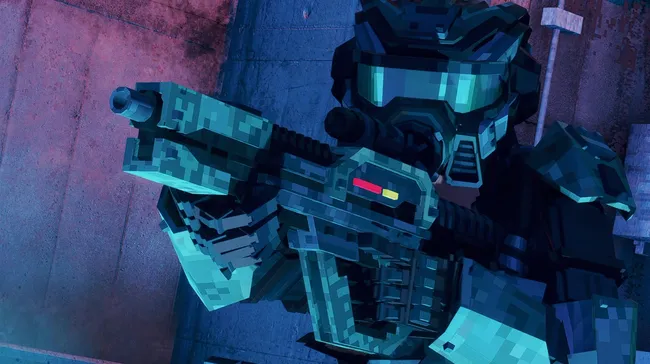
When Echo Generation first appeared during an ID@Xbox showcase back in 2020, it immediately stood out as something different. Developed by Cococucumber, the game wasn’t just another indie RPG trying to replicate the classics—it was a carefully crafted love letter to childhood imagination, small-town mystery, and the kind of pop-culture nostalgia that defined late 80s and early 90s storytelling.
From The Goonies to Ghostbusters: Afterlife, and more recently Stranger Things, the inspiration was clear. But rather than simply copying that aesthetic, the developers built something that felt personal—like a memory filtered through pixel art, turn-based combat, and quiet suburban wonder.
Now, with Echo Generation 2, Cococucumber attempts something even more ambitious: taking that nostalgic foundation and expanding it into a richer, more complex, and more mechanically interesting experience.
A Familiar Feeling, Reimagined
From the moment you begin playing Echo Generation 2, there’s an immediate sense of familiarity. It doesn’t try to reinvent its identity or distance itself from the original—instead, it leans into what already worked and refines it.
The experience feels almost like sitting down on a weekend morning, turning on a Saturday cartoon, and pouring yourself a bowl of cereal. There’s comfort in the tone, warmth in the presentation, and a steady rhythm to the way the game introduces its world.
But what’s surprising is how quickly that comfort transforms into genuine emotional investment. The characters, settings, and intertwined narratives begin to feel more layered than expected for what initially appears to be a light nostalgic RPG.
Two Stories, Two Perspectives
One of the most notable structural changes in Echo Generation 2 is its dual-protagonist narrative.
At the start, players are given the choice between two separate storylines: Sister M and Jack. Although they exist within the same world, their experiences unfold independently, at least initially, and offer distinctly different tones and gameplay approaches.
Sister M’s story begins in a bleak and mysterious setting. She is escaping a facility where children appear to have been raised under controlled and experimental conditions. The world around her is oppressive, unclear, and filled with unanswered questions. Her journey revolves around survival, discovery, and uncovering the truth behind figures like “The Commander” and the fate of the other children.
Jack’s storyline, on the other hand, begins in a much more grounded and relatable environment. He is on a family weekend getaway when an explosion occurs at a nearby science facility—his workplace. Suddenly, what was supposed to be a peaceful break becomes a race to get his family to safety, while also being pulled back into the chaos of the incident that triggered everything.
Although both narratives appear separate at first, there is an underlying sense that they are deeply connected. The game encourages curiosity, subtly hinting that these parallel perspectives may eventually converge in unexpected ways.
Later chapters expand this structure further, introducing additional playable characters such as Annata Z, a zombie with fragmented memories and a missing child, and Nolivia, a futuristic bounty hunter with her own mysterious motivations. Each character brings a new tonal shift and gameplay variation, reinforcing the idea that this world is larger and more interconnected than it first appears.
Visual Design and Atmosphere
Visually, Echo Generation 2 continues the distinctive style of its predecessor, blending retro-inspired pixel art with modern 3D depth and lighting techniques.
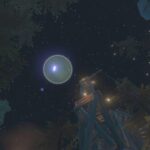
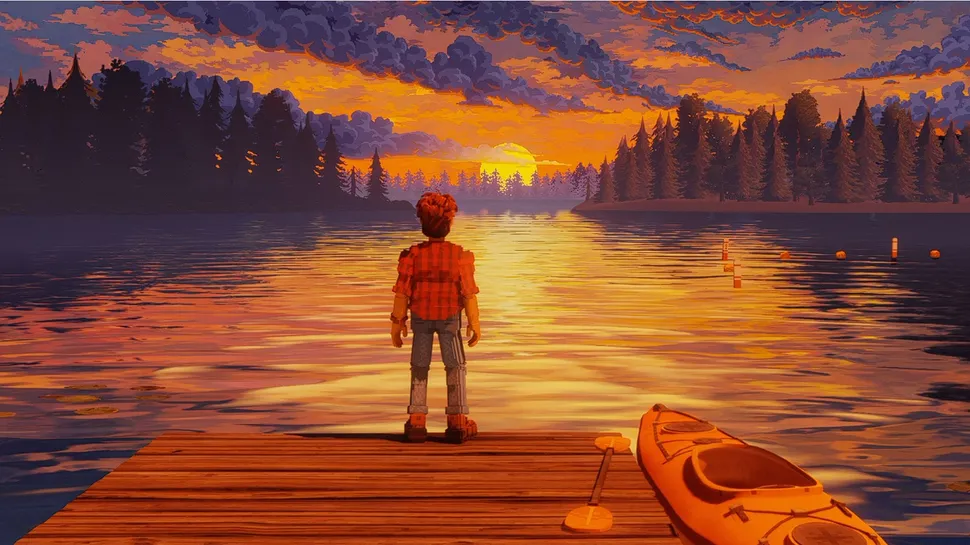
Every environment feels carefully constructed, not just as a backdrop but as a storytelling tool. One moment that stands out early in Jack’s story is a quiet scene overlooking a lake at sunset. It’s a simple image, but it carries a strong emotional weight thanks to the lighting and composition.
Another memorable example is a seemingly ordinary guest bedroom. At first glance, it appears unremarkable, but the way sunlight filters through the windows, casting subtle shadows across furniture and highlighting color contrasts, gives the space a surprising sense of depth. It’s in these small, carefully designed moments that the game’s artistic ambition becomes most visible.
Rather than relying on constant spectacle, the game uses lighting, framing, and environmental detail to create atmosphere. Every room, street, or interior space feels intentional, as if it exists for more than just gameplay function.
Turn-Based Combat With a Strategic Twist
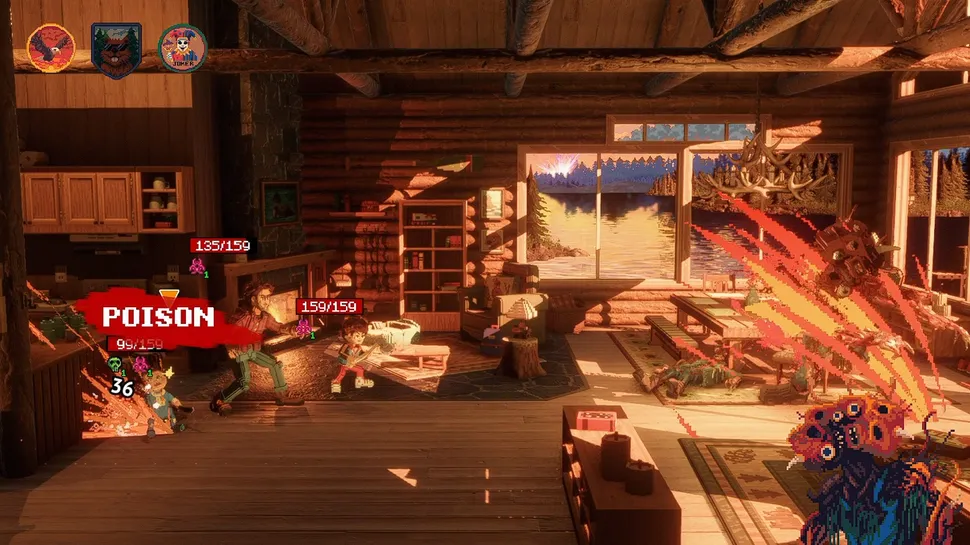
At its core, Echo Generation 2 retains the turn-based RPG structure of the original, where players and enemies alternate actions in a straightforward, easy-to-understand combat system.
However, the sequel introduces a significant evolution: a card-based combat mechanic that adds strategy and depth to every encounter.
Throughout the world, players can discover collectible cards that represent different abilities—offensive attacks, defensive maneuvers, and support skills. Each card belongs to a specific symbol type, such as diamonds, spades, or hearts, which plays directly into the battle system.
Enemies now feature a stance or guard system displayed above their health bars. Using cards that match the correct symbol allows players to break through this stance more efficiently, opening enemies up to increased damage and creating a more tactical layer to combat encounters.
This system transforms battles from simple turn exchanges into more thoughtful encounters where card selection and timing matter significantly.
Asymmetric Gameplay Through Character Design
One of the most interesting design choices in the game is how differently each protagonist approaches combat and progression.
Sister M fights alone, reflecting her isolated struggle against an oppressive system. Her gameplay emphasizes careful decision-making and limited action choices, forcing players to think more strategically about each turn.
Jack, by contrast, fights alongside his family members, creating a more dynamic and flexible combat style. With multiple participants in battle, players gain access to a wider range of actions per turn—sometimes extending from just a couple of moves to several coordinated attacks and abilities.
This contrast reinforces the narrative themes of isolation versus unity, while also ensuring that gameplay never feels repetitive between storylines.
A Compact but Meaningful Experience
Unlike many modern RPGs that stretch across dozens or even hundreds of hours, Echo Generation 2 embraces a more focused structure. A full playthrough is estimated at around nine hours for players who want to experience all major content.
This shorter length works in the game’s favor. Rather than overstaying its welcome or padding its systems with unnecessary filler, it delivers a tightly paced experience that respects the player’s time.
It is the kind of game that fits naturally between larger, more demanding RPGs—a palate cleanser that still manages to leave a lasting impression.
Accessibility and Platform Support
The game is widely accessible across multiple platforms, including Xbox Series X|S, Xbox One, PC, Steam, and supported handheld devices.
It is also included in Xbox Game Pass Ultimate and PC Game Pass, making it easy for subscribers to experience without additional cost. Support for Xbox Cloud Gaming and Xbox Play Anywhere further enhances its flexibility, allowing players to continue their progress across devices seamlessly.
This accessibility aligns well with the game’s design philosophy: approachable, flexible, and easy to pick up in short sessions or longer play periods.
Final Thoughts
Echo Generation 2 doesn’t try to reinvent the RPG genre, nor does it attempt to radically break away from its predecessor. Instead, it focuses on refinement—enhancing its storytelling structure, deepening its combat mechanics, and expanding its world while preserving its nostalgic core.
What emerges is a game that feels both familiar and fresh at the same time. It carries the comfort of childhood-inspired storytelling while introducing enough mechanical depth and narrative ambition to keep players engaged throughout.
It is, above all, a game about curiosity—about following threads, uncovering connections, and slowly realizing that every seemingly separate story is part of something much larger.
And in that sense, it succeeds in exactly what it sets out to do.