



The cancellation of Argos, the long-gestating project from Warren Spector’s OtherSide Entertainment, is not just another line in the industry’s growing list of layoffs. It reads more like the closing paragraph of a story that’s been unraveling for years.
Alongside the cancellation came the layoff of 17 developers—a small number compared to industry-wide restructurings, but significant in the context of a tight, experienced team built around one of gaming’s most influential design lineages.
For a genre already struggling to justify its commercial existence, the loss of Argos feels symbolic.
The Immersive Sim Legacy Under Pressure
To understand why this cancellation resonates, you have to understand what Warren Spector represents in game design history. Alongside Paul Neurath, Spector helped define the immersive sim through landmark titles such as:
- System Shock 2
- Deus Ex
- Thief: The Dark Project
- Ultima Underworld
These games weren’t just influential—they established a philosophy: player agency over scripted spectacle, systemic interaction over linear design, and emergent outcomes over authored sequences.
That philosophy is expensive.
Modern development realities reward scale, predictability, and monetization clarity. Immersive sims, by contrast, thrive on complexity, unpredictability, and high design overhead with uncertain return.
That tension has been building for more than a decade.
A Studio History Marked by Friction
OtherSide Entertainment was founded with unusually high expectations given its lineage. The promise was straightforward: carry forward the immersive sim tradition into a modern production environment.
What followed was far more turbulent.
- Underworld Ascendant launched in a broken, widely criticized state.
- A long, uncertain association with System Shock 3 dissolved amid licensing and development complications.
- Multiple projects were canceled or quietly re-scoped.
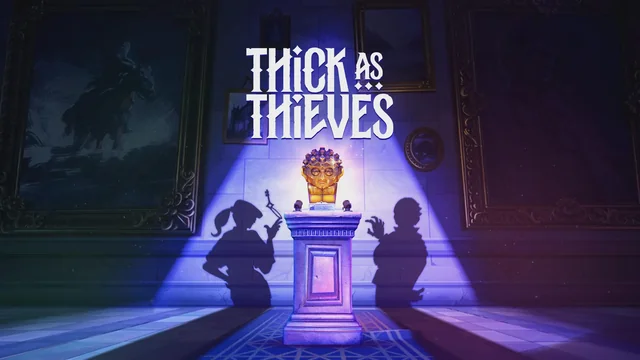
- The recent co-op stealth title Thick as Thieves launched with limited impact and underwhelming reception.
Viewed in sequence, Argos doesn’t look like an isolated failure. It looks like the endpoint of a narrowing runway.
Why Argos Mattered More Than It Should Have
Even without public gameplay footage, Argos carried symbolic weight. It was positioned—at least in early descriptions—as a return to AAA-scale immersive simulation design under Spector’s direction.
That alone made it culturally significant.
The immersive sim genre has always existed in tension with mainstream market logic. Its defining traits—non-linearity, systemic depth, and player-driven problem solving—make it beloved by a dedicated audience but difficult to scale profitably.
In modern publishing terms, it is a genre that resists optimization.
And in an industry increasingly shaped by risk reduction, that resistance has consequences.
The Structural Problem: Depth vs. Scale
The cancellation highlights a recurring industry contradiction:
- Deep systemic games require long development cycles and high iteration costs.
- Publishers increasingly prioritize predictable engagement metrics and monetizable loops.
- Small studios with ambitious systemic design often sit in the gap between those two realities.
Immersive sims don’t fail because they lack ideas. They fail because their ideas are hard to standardize.
Even when critically acclaimed, they rarely achieve the player base necessary to justify AAA budgets.
The Industry Context Isn’t Neutral
The layoffs at OtherSide Entertainment are part of a broader contraction across the industry, where studios are increasingly reshaped around financial volatility, delayed returns, and shifting publisher strategies.
Large-scale restructurings at major publishers have become common, but smaller cancellations like Argos often disappear into the noise despite representing the same underlying pressures.
The pattern is consistent:
- experimental or mid-risk projects are cut early,
- teams are reduced before completion,
- and surviving projects skew toward safer design models.
What Gets Lost When Immersive Sims Disappear
The disappearance of projects like Argos is not just about one game. It’s about the gradual erosion of a specific design philosophy.
Immersive sims ask questions other genres often avoid:
- What if the player is trusted to break the system?
- What if solutions are not authored but discovered?
- What if failure is as expressive as success?
Games like Deus Ex and System Shock 2 didn’t just deliver stories—they simulated possibility spaces.
When those spaces shrink, games become more controlled, more legible, and often more commercially predictable—but also less open-ended.
The Reality Behind “Unviable for Now”
The phrase used in the cancellation statement—“unviable for now”—is doing a lot of work.
It doesn’t necessarily mean the idea is bad. It means the conditions around it no longer support its existence.
That distinction matters. It suggests that immersive sims are not dead, but displaced. Their survival depends on finding environments where:
- long development cycles are tolerated,
- systemic design is valued over immediate retention,
- and creative risk is structurally supported.
Those environments are increasingly rare.
Conclusion: A Genre Waiting for Its Conditions to Return
The cancellation of Argos is disappointing, but not surprising. It fits into a longer pattern where ambitious systemic design struggles to survive in a production ecosystem optimized for speed, scalability, and measurable engagement.
But it would be wrong to frame this as a final collapse.
Immersive sims have always survived in cycles—disappearing from mainstream focus, then re-emerging in unexpected places, often through smaller studios or hybrid indie projects that reinterpret their principles.
What Argos represents, then, is not an ending. It is a reminder of what becomes difficult when a medium optimizes itself away from complexity.
And that tension isn’t going away anytime soon.