


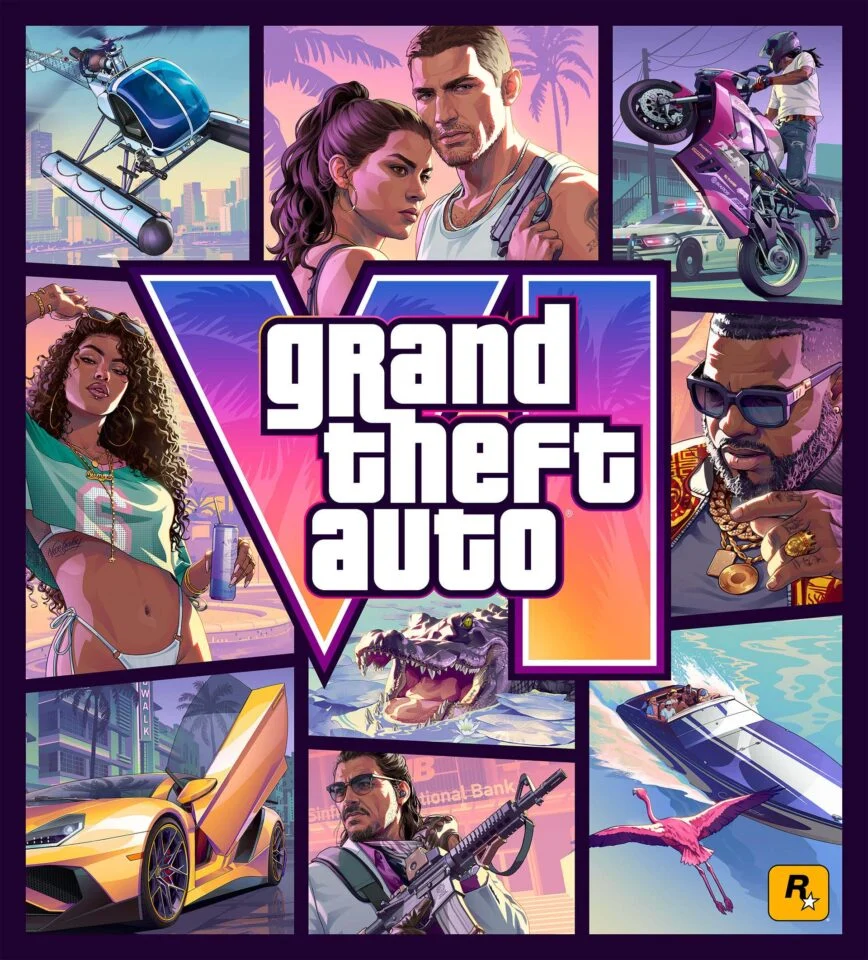
When Rockstar Games finally revealed the official cover for Grand Theft Auto 6, I did what I now realize is an entirely irrational but deeply ingrained ritual.
I looked at the top-left corner.
And, unsurprisingly, there it was again: a helicopter.
Not front and center. Not emphasized. Just quietly occupying the same symbolic position it has held—on and off—for over two decades of GTA box art history.
At this point, it doesn’t feel like coincidence anymore. It feels like structure.
A design rule Rockstar refuses to talk about, but consistently refuses to abandon.
A Pattern Hidden in Plain Sight
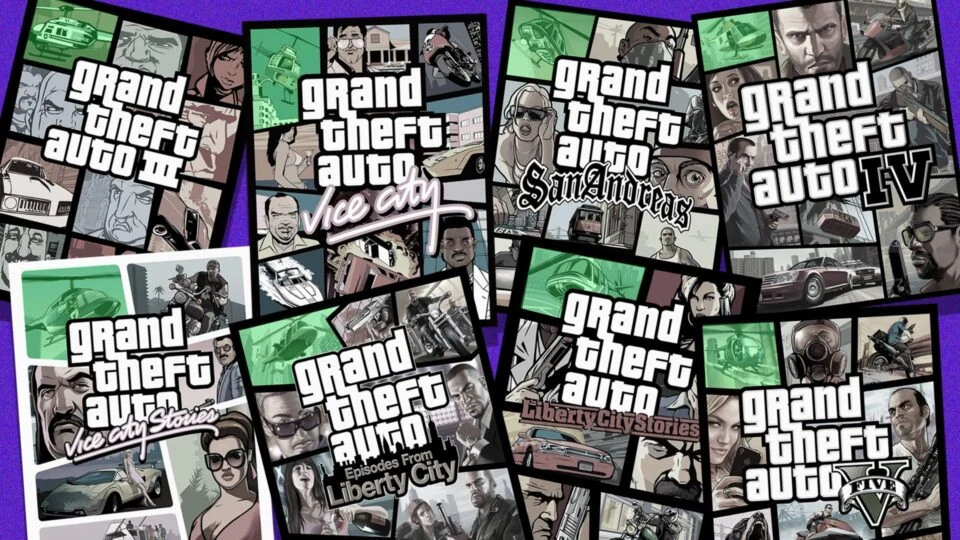
Since the early days of Grand Theft Auto III (2001), Rockstar has used a distinctive multi-panel cover style for the mainline GTA series. Each cover is essentially a collage: characters, vehicles, weapons, neon tones, city imagery.
But within that chaos, one detail has repeatedly shown up like a signature:
A helicopter in the top-left panel.
Not always the same helicopter. Not always the same composition. But consistently present enough that fans have begun treating it like an unofficial design law.
It’s the kind of detail most players never consciously notice—until they do. And once you see it, you can’t really unsee it.
It becomes a pattern you start actively looking for every time a new entry is revealed.
GTA 6 and the Return of the Ritual
With Rockstar confirming pre-orders opening on June 25, the company didn’t accompany the announcement with a new trailer. Instead, it revealed the official cover art for GTA 6.
And there it was again.
Top-left corner.
Helicopter.
No dramatic framing. No announcement highlighting it. Just quietly embedded in the composition like a visual Easter egg that is now less “secret” and more “tradition.”
At this point, Rockstar doesn’t even need to acknowledge it. The audience does the work for them.
We look for the helicopter.
We expect the helicopter.
And somehow, the absence of it would feel more noticeable than its presence ever could.
The One Time It Broke the Rule
Like any long-running pattern, there are exceptions. And GTA’s cover history has a few.
The most frequently cited break in the “helicopter rule” is:
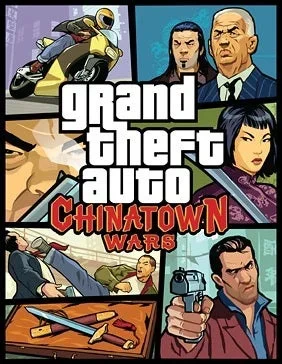
- Grand Theft Auto: Chinatown Wars (2009)
In that case, there is no helicopter in the top-left corner of the grid-style composition.
But the context matters. The cover itself deviated heavily from the established GTA aesthetic. It leaned into a different visual identity entirely, shaped by its handheld DS/PSP origins and stylized presentation.
So the exception doesn’t really feel like a violation of the rule.
It feels like the rule simply wasn’t being applied.
Other earlier or non-standard releases also deviate, such as spin-offs or alternate regional covers—but again, they often fall outside the core visual language that defines mainline GTA branding.
Which raises an interesting question:
Is this really a rule… or just a pattern we’ve retroactively formalized?
Why the Helicopter Works as a Design Anchor
What makes this detail so interesting isn’t just repetition—it’s placement.
The top-left corner in a multi-panel composition is psychologically significant in Western visual reading patterns. It is typically where the eye lands first before scanning across the rest of the layout.
So whether intentional or not, the helicopter often functions as:
- a visual “entry point” into the composition
- a subtle signal of motion and chaos
- a tone-setter for the world of the game
Helicopters themselves also carry symbolic weight in GTA:
- surveillance
- law enforcement escalation
- aerial pursuit
- systemic pressure on the player’s freedom
In other words, even if the placement began as an aesthetic choice, it aligns perfectly with GTA’s recurring themes of control versus chaos.
It’s not just decoration.
It feels structurally appropriate.
The Psychology of “Design Rituals”
Patterns like this become interesting because they sit in a strange space between intention and interpretation.
There are three possibilities:
1. It is deliberate
Rockstar intentionally preserves the helicopter placement as a signature.
2. It is inherited convention
The original designers established a composition template that successive teams simply continued using.
3. It is emergent pattern recognition
Fans identified a pattern, and now every new cover is subconsciously designed—or interpreted—through that lens.
In reality, it may be a mix of all three.
But what matters more is what the pattern does psychologically:
It creates continuity across generations of games.
Even as cities change, protagonists change, and engines change, the cover retains a visual thread that ties everything together.
A small anchor in an otherwise chaotic franchise identity.
The Motorcycle in the Top Right (The Lesser-Known Rule)
If the helicopter is the widely recognized pattern, there’s another one that occasionally gets mentioned in deeper fan discussions:
A motorcycle appearing in the top-right portion of some GTA covers.
Unlike the helicopter, this pattern is less consistent and more loosely defined. It appears in certain compositions but not with enough reliability to qualify as a true “rule.”
Still, it reinforces an interesting idea:
Rockstar’s GTA covers aren’t random collages.
They behave more like structured visual systems with recurring positional logic.
Why This Matters More Than It Should
On the surface, this is a trivial observation. A helicopter in a corner of a box art design doesn’t change gameplay, narrative, or mechanics.
But design consistency in long-running franchises matters more than it seems.
It creates:
- subconscious familiarity
- brand continuity
- visual identity across hardware generations
- emotional recognition before words even appear
Most players don’t analyze it consciously. They just feel it.
The moment you see a GTA cover, you already know what kind of world you’re looking at—even before reading the title.
That recognition is built from repetition.
And repetition is one of the most powerful tools in visual design.
Final Thought: The Comfort of Predictable Chaos
There’s something oddly fitting about this.
A franchise built around chaos, crime, unpredictability, and satire… quietly maintaining one of the most consistent visual traditions in gaming.
A helicopter in the corner of the box.
It doesn’t announce itself. It doesn’t demand attention.
It just appears—again and again—like a silent signature from a studio that understands the power of small, repeatable details.
And maybe that’s why noticing it feels satisfying.
Because in a series defined by excess, destruction, and change, a tiny visual constant is strangely reassuring.
A helicopter in the corner.
Same as it ever was.