



After a packed season of Summer Game Fest 2026 presentations, one thing is hard to dispute: the release calendar for the next year (and beyond) looks unusually dense with high-profile revivals, long-requested sequels, and ambitious reimaginings.
Beyond the marketing noise and cinematic trailers, this year’s showcases reflected a clear industry pattern: publishers are leaning heavily on established IP while selectively betting on bold reinventions of proven franchises.
Below is a structured breakdown of the ten announcements that generated the most attention, based on audience reaction, franchise legacy, and perceived creative ambition.
10. Alien: Isolation 2 — A Long-Awaited Return to Survival Horror

After more than a decade, Creative Assembly finally brought back one of the most respected survival horror experiences of the last generation.
The original Alien: Isolation became a benchmark for tension-driven design, defined by its unpredictable Xenomorph AI and oppressive atmosphere. The sequel’s reveal suggests a broader setting—this time involving a remote colony and a recon team investigating a derelict crash site.
Early impressions focus less on reinvention and more on escalation: larger environments, multiple human characters, and expanded survival systems layered over the original’s core stealth horror structure.
The challenge will be clear—preserving tension while scaling scope.
9. Virtua Fighter Crossroads — A Fighting Classic Expands Its Identity

Sega’s long-dormant fighting series returns under the stewardship of Ryu Ga Gotoku Studio.
While the core one-on-one combat system remains grounded in technical precision, the surprise addition is a full narrative campaign written by David Hayter, expanding the experience into a hybrid structure combining exploration, NPC interaction, and traditional fighting mechanics.
This positions Virtua Fighter in unusual territory: part competitive fighter, part narrative-driven action RPG experiment.
8. The Wolf Among Us 2 — A Return from Development Limbo

After years of uncertainty, Telltale confirmed a 2027 release window for the sequel to its noir fantasy detective series.
Players once again control Bigby Wolf in a case involving supernatural killings, continuing the episodic narrative style that defined the original.
Alongside the sequel, a remaster of the original game is planned, suggesting a coordinated effort to rebuild interest in the franchise before launch.
7. Spyro: A Realm Beyond — A Nostalgic Platformer Revival

Developed by Toys for Bob, Spyro’s return marks one of the most anticipated platforming revivals in years.
While gameplay details remain limited, the reveal leaned heavily on tone: bright environments, fluid traversal, and expressive character design that signals a return to classic collectathon-style platforming updated for modern expectations.
The reception so far is driven more by trust in the developer than concrete mechanics.
6. Crazy Taxi: World Tour — Arcade Chaos Reimagined

Sega revisits one of its most iconic arcade titles with a full modern remake.
Set again in an exaggerated version of San Francisco, the game updates its original formula with expanded environments, visual fidelity improvements, and additional side activities layered onto the core time-based taxi chaos.
The tone remains unchanged: loud, fast, and intentionally chaotic.
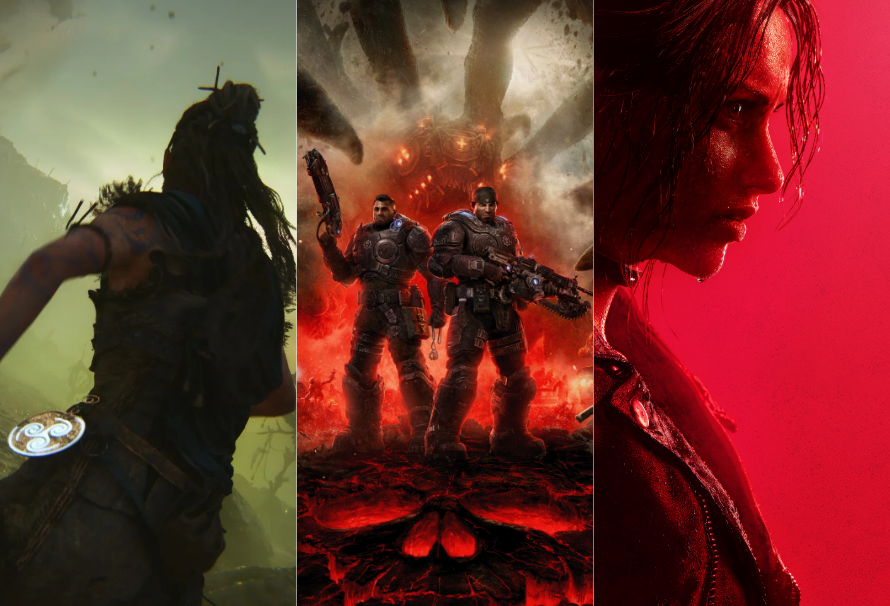
5. Senua’s Saga — A Darker, More Aggressive Direction

The next entry in the Hellblade universe shifts tone toward more direct combat while retaining its psychological focus.
The new trailer suggests a protagonist trapped in a liminal mythological space, facing both internal and external manifestations of trauma.
Combat appears more prominent than in previous entries, suggesting a structural shift toward action-heavy encounters.
4. Final Fantasy VII Revelation — The Remake Trilogy Concludes

Square Enix moves toward the conclusion of its ambitious reinterpretation of a landmark RPG.
Building on Final Fantasy VII Rebirth, this final entry expands exploration through airship traversal and introduces new party mechanics designed to deepen combat customization.
The scale is positioned as the culmination of a multi-year reinterpretation project.
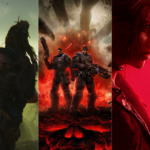
3. Gears of War: E-Day — A Return to the Beginning of the Locust War

Rather than continuing the established storyline, this entry rewinds to the initial emergence of the Locust threat.
By focusing on early versions of Marcus Fenix and Dom Santiago, the game emphasizes survival horror elements within a familiar third-person cover shooter framework.
The shift in tone suggests a return to the series’ more grounded and desperate roots.
2. God of War: Laufey — Expanding the Mythos Beyond Kratos
This entry pivots away from Kratos to focus on Faye, exploring a mythological afterlife known as the Everywhen.
The narrative expands the franchise into new mythological territories beyond Norse mythology, incorporating Egyptian elements and new character dynamics.
Combat appears faster and more technical, suggesting an evolution of the series’ action identity.
1. Resident Evil Code: Veronica Remake — The Showcase’s Biggest Announcement

Capcom revisits one of the most requested remakes in the Resident Evil franchise.
Following the success of previous modern remakes, this project rebuilds the original survival horror experience with contemporary visuals, over-the-shoulder gameplay, and expanded narrative presentation.
Given Capcom’s recent track record, expectations are extremely high for both fidelity and reinvention.
Final Takeaway: A Familiar but High-Confidence Future
Across all ten announcements, a clear pattern emerges:
- Heavy reliance on established IP
- Strong emphasis on remakes and sequels
- Selective experimentation within familiar frameworks
Rather than signaling creative stagnation, this lineup reflects an industry balancing risk with reliability—reviving trusted franchises while cautiously evolving them for modern audiences.
If even half of these projects deliver on their promises, the next few years of gaming will be defined less by new IP breakthroughs and more by the reinvention of legacy worlds at modern scale.